

 English
 русский
How Does a Steel Descaling Pump Achieve Energy Savings?
Energy efficiency has become an increasingly important factor in modern steel production. For high-pressure descaling systems, optimizing pump operation through intelligent control technologies can significantly reduce power consumption while maintaining stable descaling performance.
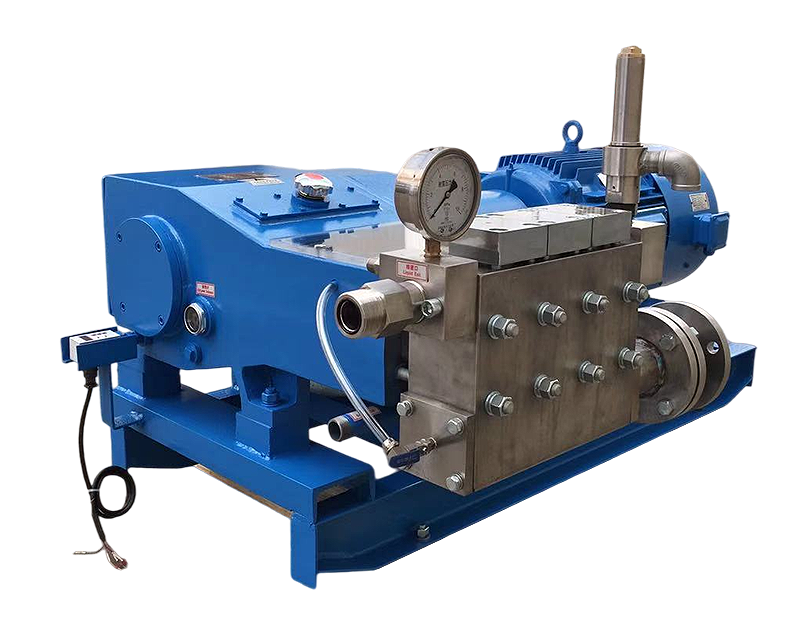
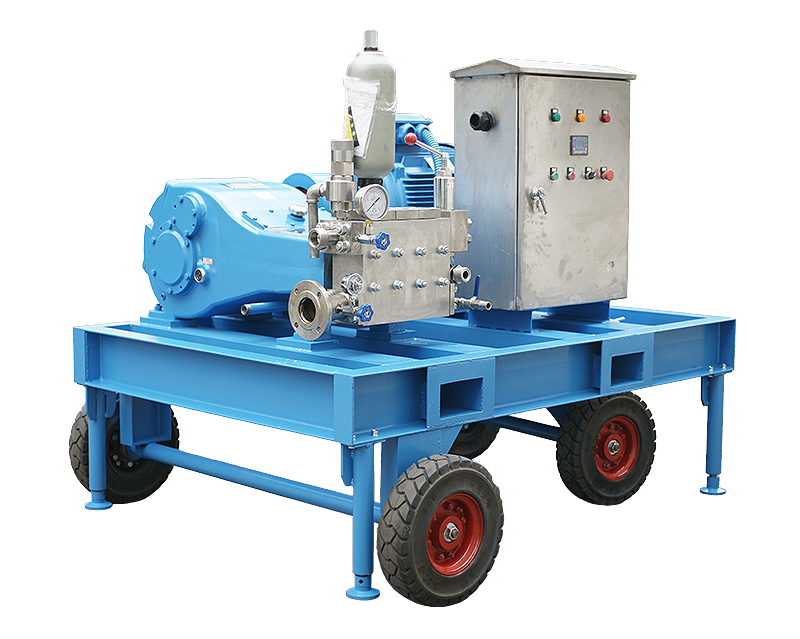
Wuxi Petrel’s high-pressure steel descaling pump systems improve energy efficiency through variable frequency control, segmented operation, accumulator integration, and intelligent monitoring.
1. Variable Frequency Drive (VFD) Replaces Valve Throttling
Traditional descaling systems often regulate pressure and flow by valve throttling, which creates unnecessary energy losses. By applying a high-voltage Variable Frequency Drive (VFD) or hydraulic coupling, the system adjusts motor speed according to actual demand instead of wasting energy through throttling.
Since pump power consumption is approximately proportional to the cube of rotational speed, reducing pump speed can significantly lower energy consumption. In practical applications, VFD control can achieve average energy savings of 25–33%.
2. On-Demand Segmented Operation
Steel descaling processes often operate with different numbers of descaling points depending on production requirements. An intelligent control system can automatically adjust pump output according to the actual demand.
For example:
- Single-point descaling operation: approximately 45 Hz
- Two-point descaling operation: approximately 48 Hz
- Three-point descaling operation: 50 Hz
This demand-based operation avoids oversized pump operation and eliminates unnecessary energy consumption caused by the “big horse pulling a small cart” situation.
3. Accumulator and VFD Combined Energy-Saving Operation
The combination of a pulsation accumulator and VFD control further improves system efficiency.
During descaling intervals, the pump operates at lower speed to gradually charge the accumulator. During the actual descaling process, both the pump and accumulator provide water simultaneously, reducing the time the pump operates under maximum load.
This coordinated operation can reduce overall power consumption by more than 20% while maintaining stable descaling pressure.
4. Reduced Speed Operation During Idle Periods
During non-production periods, such as roller replacement, equipment warming, or maintenance intervals, the pump does not need to operate at full speed.
By reducing operating frequency to 15–30 Hz, the motor power consumption can be significantly reduced. Since pump power follows the speed cube relationship, energy consumption can be reduced to approximately 7–12% of full-load operation during standby conditions.
5. Intelligent Minimum Flow Valve Control
During low-speed operation, the minimum flow valve automatically adjusts to maintain safe pump operation and prevent overheating. This intelligent control avoids inefficient continuous circulation and reduces unecessary energy losses during low-demand operation.
6. Pump Lifecycle Management and Predictive Maintenance
Modern descaling pump systems can integrate intelligent monitoring technologies to track key operating parameters, including:
- Vibration
- Motor current
- Temperature rise
- Lubrication conditions
By identifying potential failures at an early stage, maintenance schedules can be optimized and inefficient operation caused by equipment degradation can be avoided, providing additional energy savings of approximately 3–5%.
Conclusion
Energy-efficient steel descaling systems are achieved not only through high-performance pumps but also through intelligent operation strategies. By combining VFD control, accumulator technology, demand-based operation, and predictive maintenance, high-pressure descaling pumps can significantly reduce energy consumption while improving production efficiency and reliability.

Company Profile
About Us
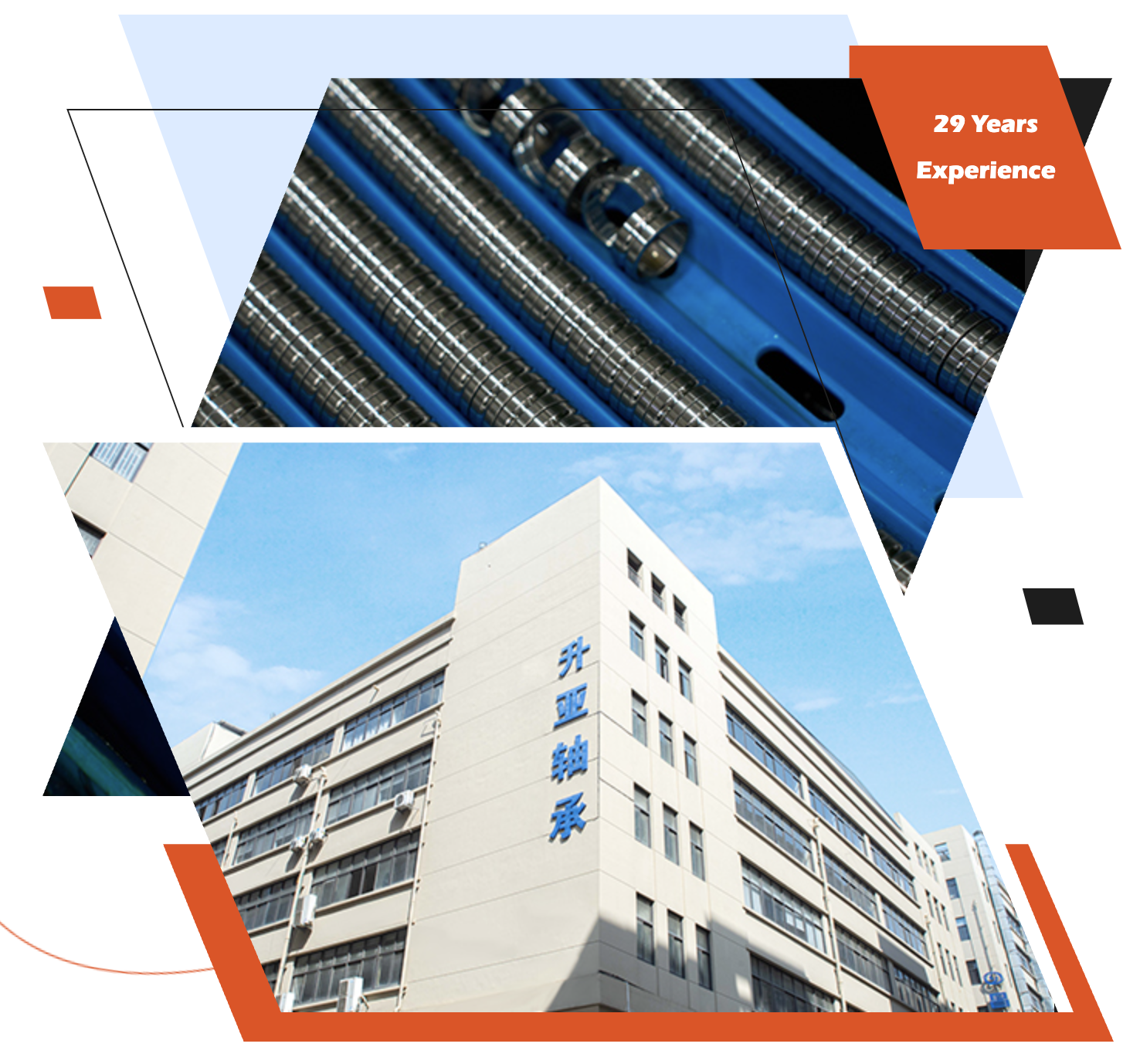
Petrel's foreign trade share takes around 50%. To meet standards and requirement of different foreign clients, Petrel continuously improve its production management.
Petrel improves product management system by ensuring the trackability of raw material sourcing, heat treatment process, and machining accuracy. The codes on key parts allow Petrel to track which steel mill supplies the material, which factory conducts the heat treatment, inspection records of fine machining, etc.
To sustain products' high quality, Petrel heavily invests its calibration lab by importing various inspection equipment, such as spectrometers, Brinell hardness gauges, coordinate measuring machine, etc.
To promote and sustain a high level of productivity and safety, Petrel also pays attention to employee training, which includes 6s lean methodology, instructions of equipment, standards, requirement of production process, etc.
News
-
Wuxi Petrel 3ZX90 high pressure filter screen cleaning pump features pneumatic three-way valve contr···
READ MORE -
Wuxi Petrel provides high pressure plunger pump systems for aviation fuel, lubricating oil, and dies···
READ MORE -
Wuxi Petrel 3DP40 high pressure water mist pump provides reliable water mist solutions for marine sy···
READ MORE -
Wuxi Petrel supplied 13 high pressure spunlace pumps for a Turkey nonwoven production line, includin···
READ MORE -
CMM inspection verifies geometric tolerances of high pressure plunger pump power frames, including b···
READ MORE -
Learn how the Prussian Blue contact test verifies cone sealing quality, contact area, and uniformity···
READ MORE
If you are interested in our products, please consult us
CONTACT DETAIL
- Tel: +86-510-83380007
- Mob: +86-15006196717
- E-mail:chengji@hygyb.com
- Address:No.35 Yanyu Mid-road, Qianzhou Town, Huishan District, Wuxi, Jiangsu, China
PRODUCTS
MOBILE TEMERNAL

Copyright © 2025 Wuxi Haiyan High-pressure Valve Factory. All Rights Reserved.
